


Finding Land for Your DIY Build: The Hardest Part Nobody Warns You About

I never saw our land before we bought it.
Not a walkthrough, not a second visit, not even a full afternoon to think it over.
My husband drove out, looked at it once, and we made an offer almost immediately after.
That's how fast it happened — after months of getting absolutely nowhere.
Our story

We'd been searching for land for months with basically no luck.
We'd visit a parcel, get excited, and then hit a dead end — already under contract, wrong
zoning, no road access, something.
Round and round.
The whole time, we were living in my parents' basement.
Three months in, still searching, still striking out, starting to wonder if we'd ever find the right piece of ground.
Then it came together in a way we never could have planned for.
We heard through the grapevine — not a listing, not an agent, just local word of mouth — that a farmer in our area wanted to sell off some acreage but didn't want to put it on the open market.
He was willing to split his land into portions and sell pieces off individually.
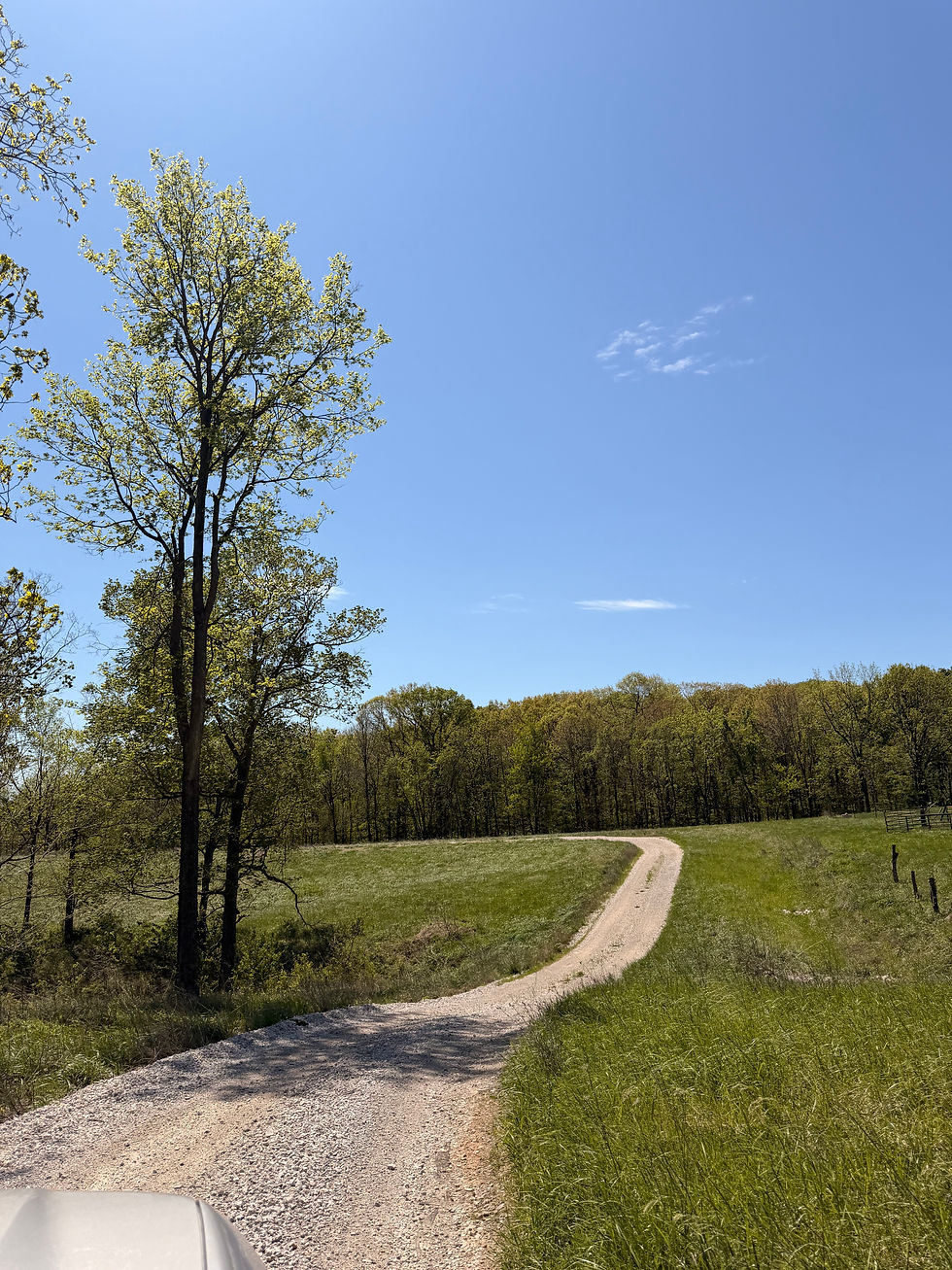
He sold us 20 acres.
It happened so fast that I never even saw the land before we bought it.
My husband was the only one of us who went out and looked, and even his visit was quick — there wasn't time to deliberate.
We made an offer almost immediately after hearing about it.
Looking back, it's the perfect example of why word of mouth and local relationships matter as much as any listing site.
That farmer never intended to list his land publicly. If we hadn't been talking to people, asking around, and staying visible in our local network, we never would have heard about it at all.
That's the part nobody tells you about building your own home: before you ever pour a foundation or pick up a hammer, you have to find the ground to build on.
And depending on where you live and what you're looking for, that alone can be the hardest part of the entire process.
Why land hunting is so brutal
Good buildable land — especially land priced for someone financing their own build
instead of a developer buying in bulk — doesn't sit around.
It gets scooped up fast, often before it's even fully listed.
That means the process looks less like calmly browsing listings on a Saturday morning and more like this:
Getting a text that a parcel just hit the market and dropping everything to go see it that evening, no dinner, still in your work clothes.
Scrambling to find someone to watch your kids on short notice — or just strapping them into the car and bringing them along because there's no time to arrange anything else.
Doing this over and over, multiple evenings and weekends in a row, for months, with nothing to show for it most of the time.
Getting your hopes up on a parcel, doing the drive, and finding out it's already under contract, has drainage issues, no road access, or restrictions that kill your plans.
It is exhausting, and it can feel like all output and no result for a long stretch.
That's normal.
It doesn't mean you're doing it wrong — it means you're doing it right.
The people who find good land are usually the ones who kept showing up after the fifth or sixth dead end.
Where to actually look
Don't rely on just one source. Land moves through more channels than houses do, and a lot of the best parcels never touch a traditional MLS (multiple listing service) listing at all.
1. MLS / Realtor.com / Zillow — land filters Start here for a baseline, but don't stop here. Set up saved searches with alerts so new listings hit your inbox or phone the moment they're posted — not once a week. In competitive areas, being the first call matters more than almost anything else.
2. LandWatch, Land And Farm, and Lands of America These sites specialize in acreage, farmland, and rural parcels and often surface listings that don't show up on general home-buying sites.
3. County GIS / parcel viewer and assessor's website Nearly every county has a GIS mapping tool where you can see parcel boundaries, ownership, acreage, zoning, and often the owner's mailing address. This lets you identify land that interests you even if it isn't for sale — more on that below.
4. Local real estate agents who specialize in land or farm sales Not every agent works land deals the same way they work home sales. Find one who specifically works with rural or acreage properties in your target area — they often hear about parcels before they're publicly listed.
5. Auctions — county tax auctions and land auctions Tax-delinquent property auctions and dedicated land auction sites can turn up parcels at below-market prices, though they usually require faster decision-making and sometimes cash.
6. Driving the area and knocking on doors (literally) If you have a specific area in mind, drive it. Look for land that looks unused or underused, note the address, and pull the owner's info from the county GIS site. A polite letter asking if they'd ever consider selling a portion has worked for more people than you'd think.
7. Local Facebook groups, Craigslist, and community boards Rural and small-town Facebook groups are often where "unlisted" land gets mentioned first — someone's uncle wants to sell off the back forty, a farmer wants to split off some acreage, someone inherited land and just wants it gone.
8. Word of mouth — feed stores, hardware stores, diners, church In rural and semi-rural areas especially, this is huge. Talk to everyone. Tell people what you're looking for. Land sales in these areas often move through relationships before they ever move through a listing — that's exactly how ours came to be.
9. Extension offices and local farm bureaus Farmers and landowners sometimes mention wanting to sell off portions of their acreage through these local networks, especially in ag-heavy counties.
Questions to ask before you make an offer
When you're moving fast, it's easy to get swept up in the excitement of a parcel and forget to ask the basics.
Try to get answers to these before you commit, even if you only have a few minutes on-site to do it:
Is there water? Is it on a public/rural water line, or will you need a well? If a well, has one already been drilled, and if not, has the area been tested for well yield and water quality?
Is there electric? Is power already run to the property line, or will you need to pay for the utility company to extend lines? That cost can be significant depending on distance from the road.
Are there established easements? Does anyone else have legal access rights across the land (a shared driveway, a utility easement, a neighbor's right-of-way)? Are there easements you'll need in place to reach your own parcel from the road?
What's the septic/perc situation? Has the land been perc tested, and does it support a septic system? This can make or break buildability on rural land.
What's the zoning and are there any deed restrictions? Confirm the parcel is zoned for residential use and check for any restrictions on structure size, livestock, outbuildings, or setbacks.
Is there legal road access? Does the parcel have direct road frontage, or is access only through a shared or private drive? Landlocked parcels can come with major complications.
Has it been surveyed? Are the boundary lines clearly established, or will you need to pay for a survey before building?
What's the flood zone and drainage situation? Check FEMA flood maps and look at how water moves across the property, especially after rain.
Getting straight answers to these on the spot isn't always possible, but knowing which ones are dealbreakers for you ahead of time means you can ask the right questions fast and not waste weeks discovering a problem after you've already fallen in love with the parcel.
How to move fast when something comes up
Get pre-approved (or have your financing plan solid) before you start looking, so you can make an offer the same day if needed.
Know your must-haves and dealbreakers cold — perc test requirements, road frontage, utility access, zoning — so you're not researching basics while someone else is signing a contract.
Line up a go-to plan for the kids ahead of time (a neighbor, a family member, or just accept that they're coming with you) so that logistics never delay the drive.
Be honest with your employer if you can — some flexibility to leave a little early or take a call during the day can matter more than you'd expect.
Expect a lot of nothing before you get a yes. Budget the emotional energy for it.
So keep searching the listing sites.
Keep checking the GIS maps.
But also talk to people — everyone, constantly — about what you're looking for.
Sometimes the deal that actually works out isn't the one you found. It's the one that found you!



Comments